You just paid for window cleaning, and now there is water pooling on your sill, running down your wall, or dripping onto your floor. It is a frustrating and sometimes alarming situation, especially when you trust someone to take care of your property. The good news is that this kind of leak almost always has a clear cause and a practical fix. In Charlotte, NC, where humidity stays high and summer storms test every seal on your house, a little water finding its way inside during exterior service is more common than most homeowners expect. This guide walks you through exactly what to do right now, what likely caused the problem, and how to protect your home going forward.
Key Takeaways
- Stop the source, protect your belongings, and soak up standing water immediately. Acting quickly is crucial to limit damage from water intrusion.
- Leaks after exterior cleaning are often caused by pre-existing defects such as failed caulking, worn weatherstripping, or compromised seals rather than the cleaning method alone, but they must be taken seriously.
- Older or poorly sealed windows, especially hard to reach glass on upper stories, are more vulnerable during any type of exterior wash.
- Water intrusion can damage trim, drywall, insulation, and furnishings, so quick drying, a basic inspection, and early professional help can prevent costly repairs to walls, floors, and framing.
Why Windows Sometimes Leak Right After Window Cleaning
Window washing can expose hidden issues in aging or poorly installed windows. Charlotte’s humid subtropical climate, with its intense UV summers and periodic freeze-thaw cycles, puts constant stress on the materials that keep water on the outside of your home. Charlotte’s climate can accelerate the degradation of window seals and framing in ways that are not always visible until water is applied under controlled conditions.
Even at low pressure, water sprayed during exterior cleaning can find tiny gaps in caulk, failed perimeter seals, or compressed weatherstripping that normal rain has not fully exposed yet. High-pressure washing can force water past worn-out caulk and into wall cavities that would otherwise stay dry in a typical afternoon shower. That is why professional services tend to favor gentler approaches around glass and frames.
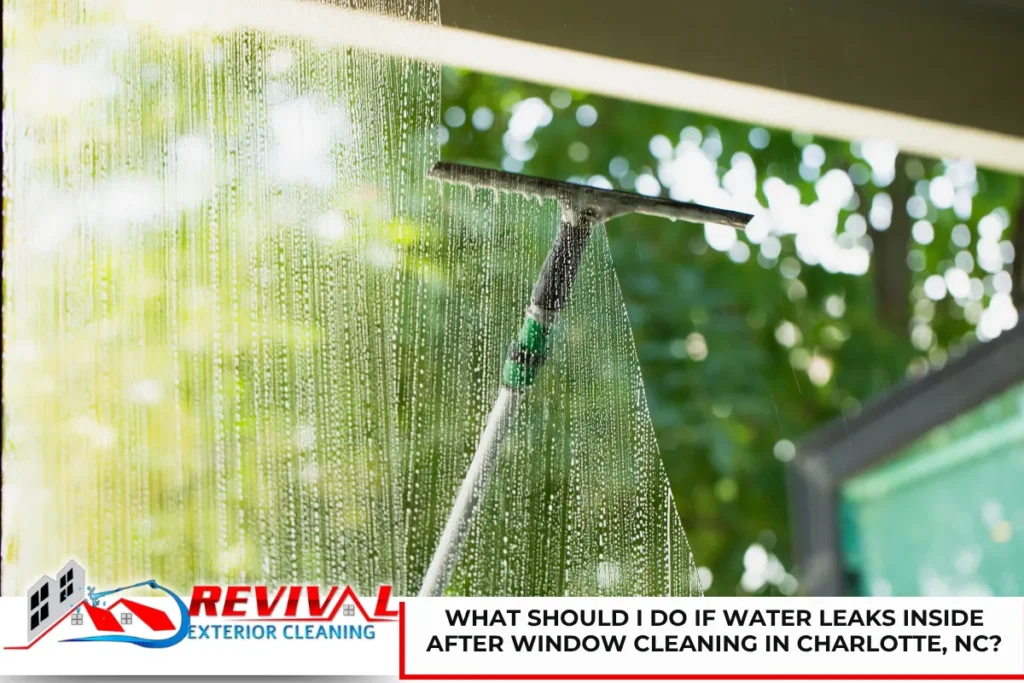
Leaks may appear on a first cleaning, on homes that have not been serviced in years, or on windows near complex rooflines where water behavior changes with spray angle. Most professional methods, including soft washing windows and purified water-fed poles, are designed to be gentle on glass and frames. They can, however, still reveal problems that have been quietly developing behind paint and trim. Professional window cleaning improves appearance and natural light, but its real hidden value is often this early warning. Finding a leak during a cleaning visit is not always a disaster. It is frequently the prompt that lets you address issues before they cause serious water damage.
Step-by-Step: What To Do Immediately When You See Water Leaking Inside
If you are reading this with an active leak in front of you, here is what to do first. Immediate action is necessary when water leaks inside after cleaning, so move quickly and methodically.
- Stop or pause the exterior cleaning if possible. If the window cleaner is still on site, let them know right away so they can redirect the spray or shut down.
- Move rugs, electronics, furniture, and anything valuable away from the wet area. Remove wet items promptly to minimize the risk of mold growth.
- Soak up standing water using towels or a wet/dry vacuum. Focus on sills, baseboards, and any pooling on hard floors.
- Place a bowl or shallow tray under any active dripping to contain the water.
- Set up fans or a dehumidifier aimed at the wet area to accelerate drying. Start this within the first 30 to 60 minutes, especially on wood trim and baseboards.
- Do not block built-in drainage systems with towels or materials. Windows have weep holes and drainage channels designed to move water out, and stuffing them can make leaking worse.
Take photos of leaks for documentation and insurance purposes. Capture the window from both sides, the path the water is following, and any visible damage to paint, trim, or flooring. Short videos can be even more useful later.
Once you have the situation under control, politely but promptly contact the window cleaner while the issue is fresh. Describe what you see, which window is affected, and ask the company to return or advise on next steps. A courteous and clear callback request gives both sides the best chance of resolving the situation quickly.
Common Causes of Leaks After Window Washing in Charlotte Homes
Many post-cleaning leaks come from long-term wear and tear, not from what happened on the day of service. Understanding the root cause helps you decide whether you need a tube of sealant or a visit from a contractor.
- Deteriorated exterior caulk. Old caulk is a common cause of window leaks. Over time, the sealant around your frames cracks, shrinks, or pulls away. Check exterior caulking and sealant around the window trim for cracks or gaps that could let water behind siding or into framing when the glass is rinsed.
- Failed glazing or perimeter seals. Seal failure in double pane windows can cause moisture buildup between the panes and create pathways for water to reach the interior. Common signs of leaky windows include moisture around the frame, fogging between panes, or mineral stains in the corners of the glass.
- Warped or rotted sills and frames. Many Charlotte homes—particularly those built during regional housing booms over the last couple of decades—frequently show rot in the bottom six to twelve inches of side casings because the caulk joint at the sill captures water and holds it against end grain. Wood that no longer sits tight against the sash lets water run behind rather than shed away.
- Improper installation or flashing. Inspect the flashing above the window frame for proper drainage. Missing or poorly installed head flashing, sill pans, or back dams can funnel water inward during any exterior rinse.
- Blocked weep holes and drainage channels. Inspect and clear weep holes on the exterior bottom track of the window frame. Buildup of dust, pollen, or debris in these channels is surprisingly common. Blocked drainage channels can trap water and cause leaks that look like a cleaning failure but are really a maintenance issue.
- Loose locks or latches. A window that is not fully closed or latched can cause leaks because the sash does not compress the weatherstripping tightly enough to keep water out. Broken window locks can allow water to enter your home even during a gentle rinse.
How to Tell If You Are Dealing With Minor Drips or Serious Water Damage Risk
It matters whether you are looking at a few drops on the sill or a stream running down the wall. The difference determines your next move.
Signs of a minor incident include a small amount of water on the interior sill that stops once the cleaning stops, no staining, no soft or swollen wood, and complete drying within a few hours.
Red flags for a more serious problem include:
- Steady dripping that continues after the exterior spray has stopped
- Wet drywall beneath the window or bubbling paint on the wall
- Musty odors in the room near the leak
- Water running from the top or sides of the frame rather than the sill
Gently press on trim and sills around the affected window. Soft, spongy, or crumbly areas suggest longer-term moisture issues that may require a contractor’s evaluation. Leaky windows can lead to water damage and higher energy bills, so ignoring repeated signs is costly. Document the extent of water damage with photos for insurance in case the situation turns out to be more involved than it first appears.
Repeated leaks in the same spot after every exterior cleaning or heavy rain almost always point to a structural or installation defect that needs to be addressed, not just managed.
Working With Your Window Cleaner When a Leak Happens
Communication and cooperation with the cleaning company usually leads to the best outcome. Most reputable professionals take these reports seriously and want to help you get to the bottom of it.
Share the photos, timing, and details of the leak with the company. Let them know which window leaked, what side of the house it faces, and whether it has ever leaked during a storm. Standard window cleaning includes interior and exterior washing, and the team may have noticed something on the outside that is relevant.
A professional window cleaner will typically review the methods used, inspect the leaking window from the exterior, and discuss whether visible defects such as cracked caulk, rotted trim, or loose glass were present before the job started. Many companies note pre-existing issues on their work order or report before service begins.
Ask for clear recommendations. Should you recaulk? Should a handyman or window specialist inspect the unit? Should the cleaning approach for that specific window change in the future? A controlled hose test can help identify leak entry points if the source is not immediately obvious.
Take care before sealing without identifying the source of the leak. Applying caulk over a symptom without understanding what is happening behind the frame can trap moisture inside the wall and make the problem worse. Routine cleaning prevents hard water deposits and pollutants on glass, so do not let one incident stop you from scheduling future service. Professional services use specialized equipment for streak-free results and can adjust their approach window by window once a vulnerability is known.
Stay calm and solution-focused. Avoid assigning blame until the installation, age, and condition of the window have been fairly considered. Trust between the homeowner and the service team is what leads to the best long-term care for your property.
Safe Cleaning Methods Around Older, Leaky, or Hard to Reach Glass
Once a window has leaked, it is natural to worry about future cleaning visits, especially on upper stories or above delicate interior finishes. The right techniques and tools make a real difference.
Gentle approaches help. Lower pressure, fan-shaped nozzles, and controlled rinsing that avoids directly forcing water into joints are the standard when working around aging seals, decorative muntins, and fragile trim. Soft washing windows use low pressure, typically between 100 and 300 PSI, combined with specialized surfactants that do the heavy lifting, followed by a light rinse. This method is far less likely to exploit a weak seal compared to a full power washing blast at 1,500 PSI or more.
Special attention is needed near hard to reach glass such as high dormers, skylight-style windows, or panes above entry roofs. Workers handling these areas should control the angle of spray carefully and reduce flow to avoid overwhelming drainage paths. Ensure that drainage slots on the bottom outside of the window frame are clear before any rinse begins.
Interior side protection, like placing towels on sills during the first re-clean after a known leak, can provide peace of mind while the window’s condition is being monitored. Recaulking windows can be a DIY repair for leaks on ground-level, accessible frames, but for anything elevated or structurally compromised, a professional evaluation is the safer route.
Preventing Future Leaks and Protecting Your Charlotte Home
Regular maintenance minimizes the chance of leaks during future cleaning or heavy storms. A little attention each year goes a long way.
- Inspect exterior caulk for cracks or gaps to maintain effective sealing. Plan to refresh caulk lines every five to ten years, and sooner on south and west facing windows where UV exposure is highest.
- Regular inspection of window seals can help prevent leaks. Check weatherstripping, screen fit, and latch function at least once a year.
- Schedule routine professional service to keep clean glass and to catch early signs of trouble such as fogging, staining, or minor seepage. Clean windows are easier to inspect than dirty ones, and consistent visits let the team notice changes over time.
- Keep gutters and downspouts clear around key window walls so runoff does not overwhelm the structure during storms or coinciding cleaning days.
- Replace or significantly repair any window that shows repeated leakage, advanced rot, or frame movement. These issues can lead to mold and long-term structural damage if left unaddressed.
Charlotte businesses may need monthly or quarterly window cleaning depending on exposure to traffic, pollen, and construction dust. For residential properties, two to four visits per year is a common fit that balances cost with consistent maintenance.
When to Call a Pro Beyond Your Window Cleaner
Some problems uncovered during cleaning extend beyond what a cleaning company can fix. Knowing when to bring in a specialist protects your home and your investment.
Call a general contractor, window installer, or building envelope specialist when you see:
- Sagging headers or visible gaps between the frame and the wall
- Chronic water stains below the unit that reappear after drying
- Soft or crumbling wood deep in the frame, not just at the surface
- Water appearing at the top of the window or in unrelated interior areas, which may suggest a larger roofing or flashing issue
Prompt action is vital to prevent mold growth in humid climates like Charlotte’s. Keep records of any professional evaluations, invoices, and repair notes in case you later need to demonstrate that you acted quickly to mitigate damage. This documentation is also helpful if you need to file an insurance claim or request a callback from the original installer.
While finding a larger issue is stressful, addressing it now protects both your property value and your indoor air quality. The security of your home depends on a sound building envelope, and a leak discovered during cleaning is your chance to get ahead of it.
Window Cleaning in Charlotte, NC – Contact Revival Today!
At Revival Exterior Cleaning & Pressure Washing, we take pride in providing professional window cleaning across Charlotte, North Carolina and the prominent surrounding areas. We understand how unsettling it can be to see water inside your home after an exterior service, and our team is committed to using careful techniques that respect your windows, trim, and interior finishes.
We assess window condition before we start every job. Our workers take extra care around older frames, and we adjust our methods around vulnerable sills and frames when needed. Whether you need clean glass on a two-story home or routine maintenance on ground-level panes, we are ready to serve you with courteous, polite, and prompt attention.
Call us at (980) 264-2359 or fill out our online contact form to request a quote and schedule expert exterior care for your home. We are local, responsive, and here to help Charlotte homeowners maintain bright, clean windows without compromising the integrity of their property. We are serving this area because it is our community, and we expect nothing less than complete customer satisfaction on every visit.
Frequently Asked Questions
Can I Safely Clean My Own Exterior Windows After a Leak Has Happened Once?
Cautious DIY cleaning is possible on ground-level windows if you use a garden hose with low pressure, mild soap, and a soft brush or squeegee. Avoid spraying directly into joints or damaged caulk. Ladder work and second-story windows with previous structural issues are better left to a professional who can control water flow and inspect seals while working. During your next cleaning session, monitor interior sills closely and stop immediately if new seepage appears. If water enters the room again, consult a window specialist for a closer look before resuming any exterior rinse on that unit.
Does a One-Time Leak During Window Cleaning Mean I Need to Replace the Whole Window?
A single, small leak does not automatically require full replacement. Many issues can be resolved with fresh caulk, minor wood repair, weatherstripping replacement, or adjusted cleaning techniques. Replacement is usually recommended only when there is significant frame rot, repeated leakage that does not respond to repair, broken seals that affect insulation performance, or major installation defects. In the Charlotte area, a single insulated glass unit replacement typically runs between 365 and 825 dollars depending on size and type. Get a targeted evaluation to compare the cost and benefits of repair versus replacement based on the window’s age and overall condition.
How Long Does It Take for a Damp Window Frame or Sill To Dry Out Indoors?
Light dampness on painted trim can dry within 24 to 48 hours with good air circulation, while deeper moisture in wood, drywall, or insulation may take several days. Open blinds to allow airflow, run fans, and use a dehumidifier in the affected room to speed drying. Charlotte’s naturally high humidity can slow indoor drying, so mechanical help makes a real difference. Check for lingering musty smells or discoloration over the following week. If these appear, a contractor should inspect for moisture trapped inside the wall cavity, as hidden dampness can lead to mold and structural concerns.
Will My Homeowners Insurance Cover Water Damage From a Leak During Exterior Window Work?
Coverage varies by policy and by how the damage occurred, so homeowners should review their policy documents carefully. Some policies cover sudden water damage, but they almost universally exclude gradual problems, deferred maintenance, or water intrusion linked to routine home maintenance and pre-existing construction defects. Contact your insurance agent with photos and written details of the event as soon as possible. Remember that most policies require you to take prompt steps to mitigate damage, including drying, cleanup, and reasonable temporary repairs. If you choose to opt out of filing a claim, keep your documentation anyway. It may prove useful if related issues surface later and you change your mind about filing.
How Often Should I Have My Windows Professionally Cleaned If I Am Worried About Leaks?
Many Charlotte homeowners choose professional service two to four times per year, which keeps glass clear and allows early detection of potential issues. Regular visits let the service team notice changes in caulk, seals, or frames over time, so small concerns can be flagged before they turn into active leaks. Properties with heavy tree cover, high pollen counts, or proximity to busy roads may benefit from more frequent cleanings. Scheduling can be customized to each home’s needs. Consistent cleaning also removes grime and mineral deposits that obscure developing problems, giving you a more complete picture of your windows’ condition throughout the year.
Disclaimer
This article provides general information only and does not constitute legal, insurance, or construction advice. Homeowners in Charlotte, NC should consult qualified local professionals for specific inspections, repairs, and coverage questions related to water intrusion.
Read How Long Should I Wait Before Painting After Pressure Washing in Charlotte, NC?