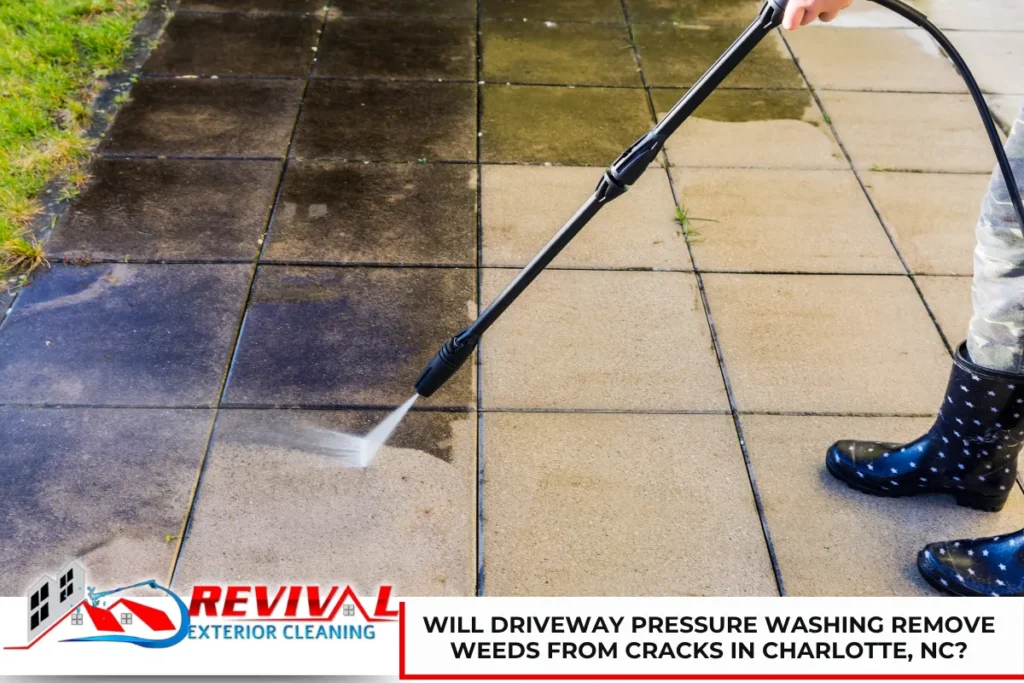
Why weeds in driveway cracks become a bigger problem than you think
Driveway Pressure Washing in Charlotte, NC is often the first solution homeowners consider when weeds start sprouting through cracks, but many quickly realize that removing them is not always as simple as blasting water. Those stubborn weeds push through concrete joints, making your driveway look neglected while slowly widening cracks over time. Left untreated, they trap moisture, accelerate deterioration, and even create tripping hazards.
The frustration builds when weeds return just weeks after cleaning. Many homeowners waste time and effort using ineffective methods that only address surface growth. The real solution lies in understanding how driveway pressure washing works, what it can and cannot do, and how to pair it with the right follow-up steps to stop weeds for good.
How weeds grow through concrete and asphalt cracks
Weeds don’t need much to thrive. Even the smallest crack in your driveway can become a growing environment when debris, dirt, and moisture accumulate.
What causes weed growth in driveways
- Wind carries seeds into cracks
- Organic debris creates a nutrient-rich base
- Water collects and softens the surrounding material
- Sunlight reaches the crack surface
Once these conditions are present, weeds root deeply beneath the surface, making them difficult to fully remove.
Why Charlotte’s climate accelerates weed growth
Charlotte’s humid subtropical climate creates ideal conditions for weeds. Warm temperatures and frequent rainfall encourage rapid growth, especially during spring and summer. This means driveway cleaning needs to be more proactive compared to drier regions.
Can driveway pressure washing actually remove weeds?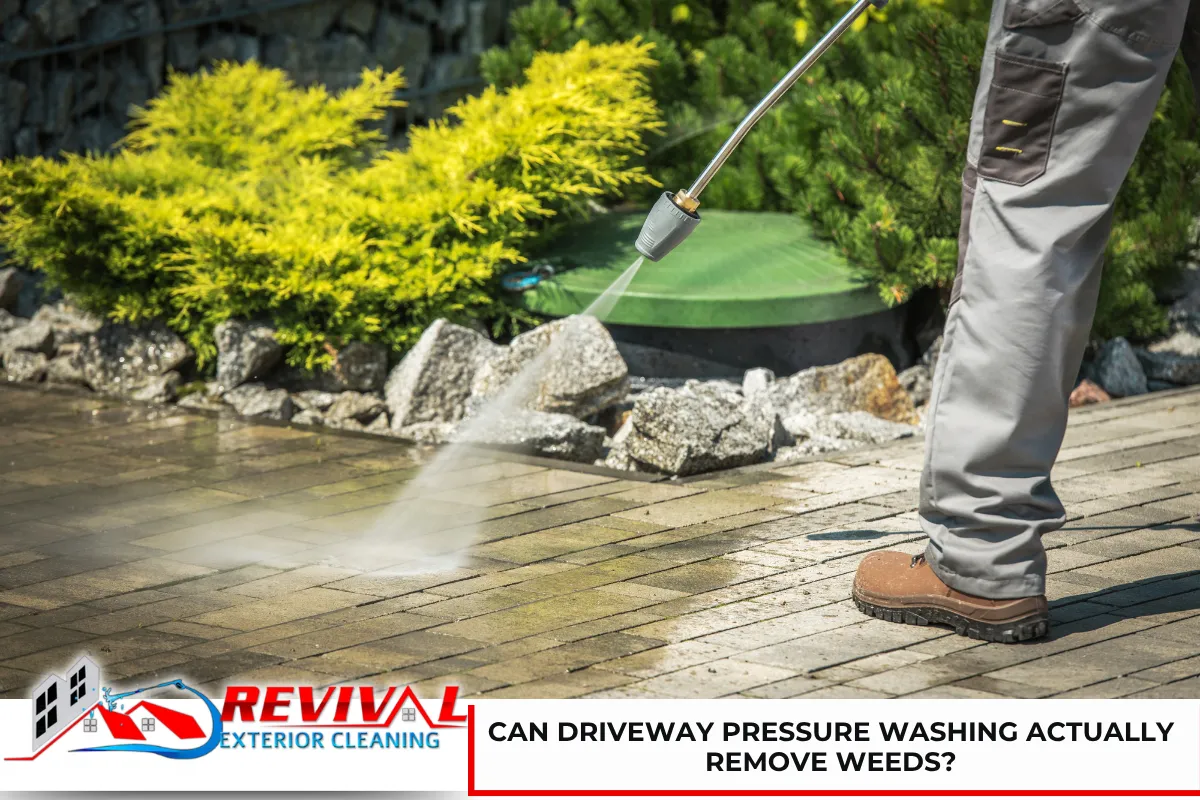
Pressure washing is highly effective at removing visible weeds, but it’s important to understand its limitations.
What pressure washing does well
Driveway washing uses high-pressure water to:
- Blast away surface weeds and grass
- Remove dirt, algae, and buildup
- Clean out loose debris from cracks
- Improve overall curb appeal
In most cases, pressure wash driveways can eliminate weeds that are already above the surface and loosen shallow roots.
What it doesn’t fully solve
While driveway pressure washing removes visible growth, it typically does not:
- Kill deep root systems
- Prevent regrowth on its own
- Seal cracks or stop moisture intrusion
This is why weeds often return if additional steps are not taken.
The difference between surface cleaning and root removal
One of the biggest misconceptions about driveway cleaning is that it eliminates weeds permanently.
Surface-level removal
Pressure washing clears:
- Leaves and organic matter
- Moss and algae
- Small or newly sprouted weeds
This creates a clean, refreshed surface.
Root-level issues
Deep-rooted weeds remain beneath the surface. Without treatment, they regrow quickly, sometimes within days or weeks depending on conditions.
To achieve lasting results, homeowners need a combined approach that goes beyond driveway washing alone.
Best practices for removing weeds from driveway cracks
To get the most out of pressure wash driveways, follow a multi-step process.
Step 1: Initial driveway pressure washing
Start with a thorough cleaning to remove:
- Visible weeds
- Dirt and debris
- Organic buildup
This exposes the cracks and prepares them for further treatment.
Step 2: Apply a weed killer or natural solution
After cleaning, apply a treatment such as:
- Commercial herbicides
- Vinegar-based solutions
- Boiling water for smaller areas
This step targets the root system.
Step 3: Fill and seal cracks
Once weeds are removed, sealing is critical.
- Use crack fillers or sealants
- Prevent water infiltration
- Block future seed growth
Step 4: Regular maintenance
Routine driveway cleaning helps prevent buildup that leads to weed growth.
Read How Often Should I Schedule Driveway Pressure Washing in Charlotte, NC?
Should you use hot water or cold water pressure washing?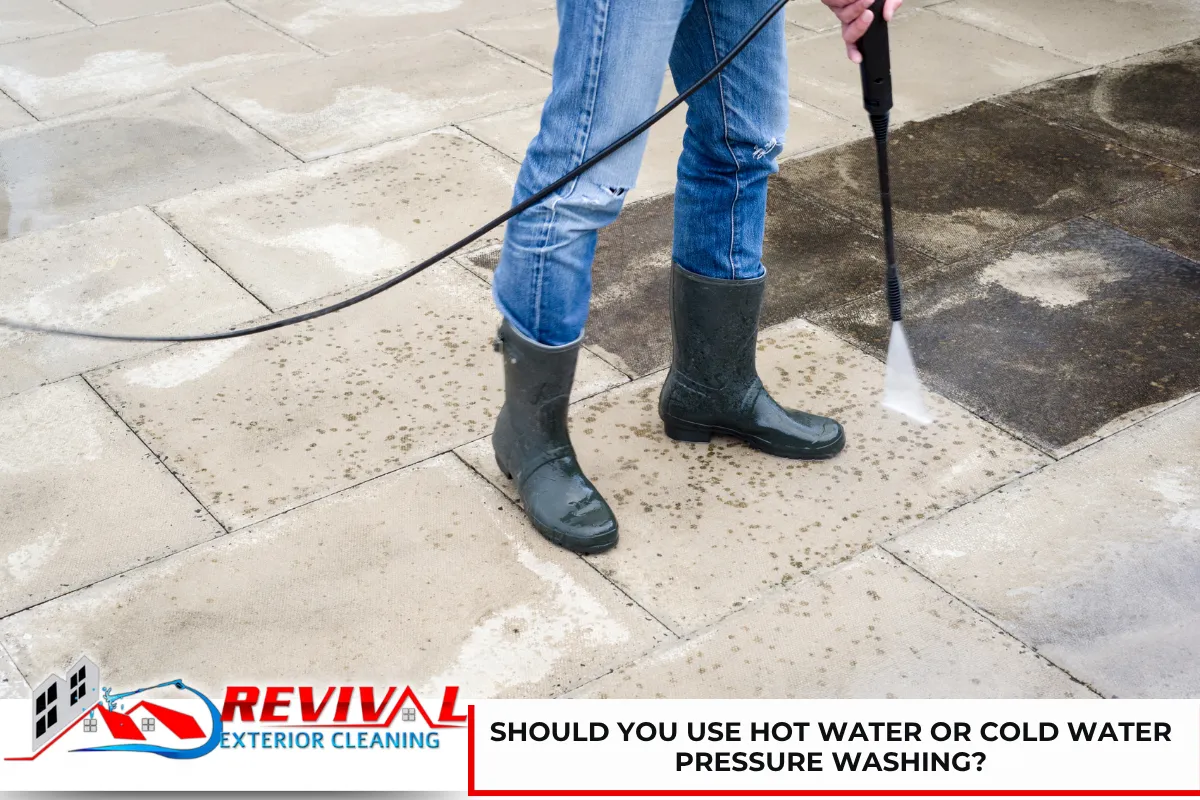
The type of pressure washing used can impact effectiveness.
Cold water pressure washing
- Effective for dirt and loose debris
- More common for residential driveway washing
- Less effective on organic growth
Hot water pressure washing
- Breaks down organic material more efficiently
- Helps kill bacteria and some root structures
- Ideal for tougher cleaning jobs
Professional driveway pressure washing services often use hot water systems for better results.
Risks of DIY driveway washing
While many homeowners attempt to pressure wash driveways themselves, there are risks involved.
Common mistakes
- Using too much pressure and damaging concrete
- Uneven cleaning patterns
- Failing to remove roots
- Skipping sealing steps
Potential damage
Improper driveway cleaning can lead to:
- Surface etching
- Widened cracks
- Water intrusion
Hiring professionals ensures proper technique and long-term results.
Local considerations for pressure washing in Charlotte, NC
Charlotte and Mecklenburg County have regulations regarding water runoff and environmental protection.
Stormwater regulations
- Wastewater should not enter storm drains untreated
- Chemicals must be used responsibly
- Runoff containing detergents must be managed properly
Best practices for compliance
- Use eco-friendly cleaning solutions
- Control runoff with barriers or vacuum systems
- Avoid washing directly into street drains
Professional services are familiar with these guidelines and help homeowners stay compliant.
How often should you pressure wash your driveway?
Frequency depends on several factors.
Recommended schedule
- Once per year for general maintenance
- Twice per year in high-growth areas
- More frequently if shaded or heavily used
Signs you need driveway cleaning
- Visible weeds or moss
- Dark stains or discoloration
- Slippery surfaces
- Accumulated debris in cracks
Regular driveway washing helps prevent weed growth before it becomes severe.
Preventing weeds after driveway pressure washing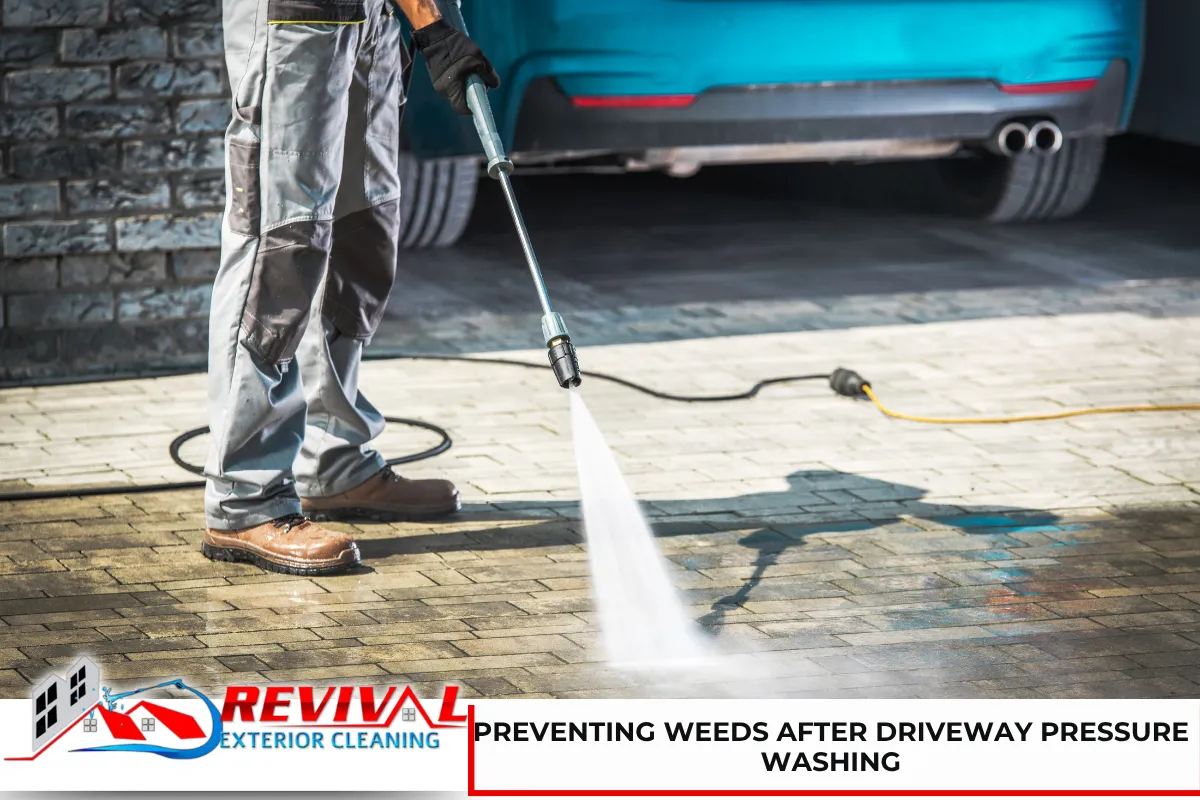
Stopping weeds from coming back requires consistent care.
Long-term prevention tips
- Seal cracks annually
- Keep driveway edges clean
- Remove debris regularly
- Apply preventative treatments
Landscaping adjustments
- Trim nearby plants
- Improve drainage
- Reduce soil accumulation near edges
Combining these steps with routine driveway pressure washing provides lasting results.
When to call a professional service
There are situations where professional help is the best option.
Consider professional driveway pressure washing if:
- Weeds are deeply rooted
- Cracks are extensive
- Surface stains are severe
- You want long-term prevention
Professionals use specialized equipment and techniques that go beyond standard DIY methods.
What to expect from a professional driveway cleaning service
A quality service includes more than just spraying water.
Typical process
- Inspection of driveway condition
- Pre-treatment for weeds and stains
- High-pressure cleaning
- Post-treatment for root control
- Optional sealing
This comprehensive approach ensures both immediate and long-term results.
The real answer: Does pressure washing remove weeds for good?
Driveway pressure washing is an essential step in removing weeds, but it is not a permanent solution by itself. It effectively clears visible growth and prepares the surface for deeper treatment. However, without addressing the root system and sealing cracks, weeds are likely to return.
The most effective strategy combines driveway washing with proper weed control and preventative maintenance. When done correctly, this approach not only improves the appearance of your driveway but also extends its lifespan.
Driveway Pressure Washing in Charlotte, NC – Revival Exterior Cleaning & Pressure Washing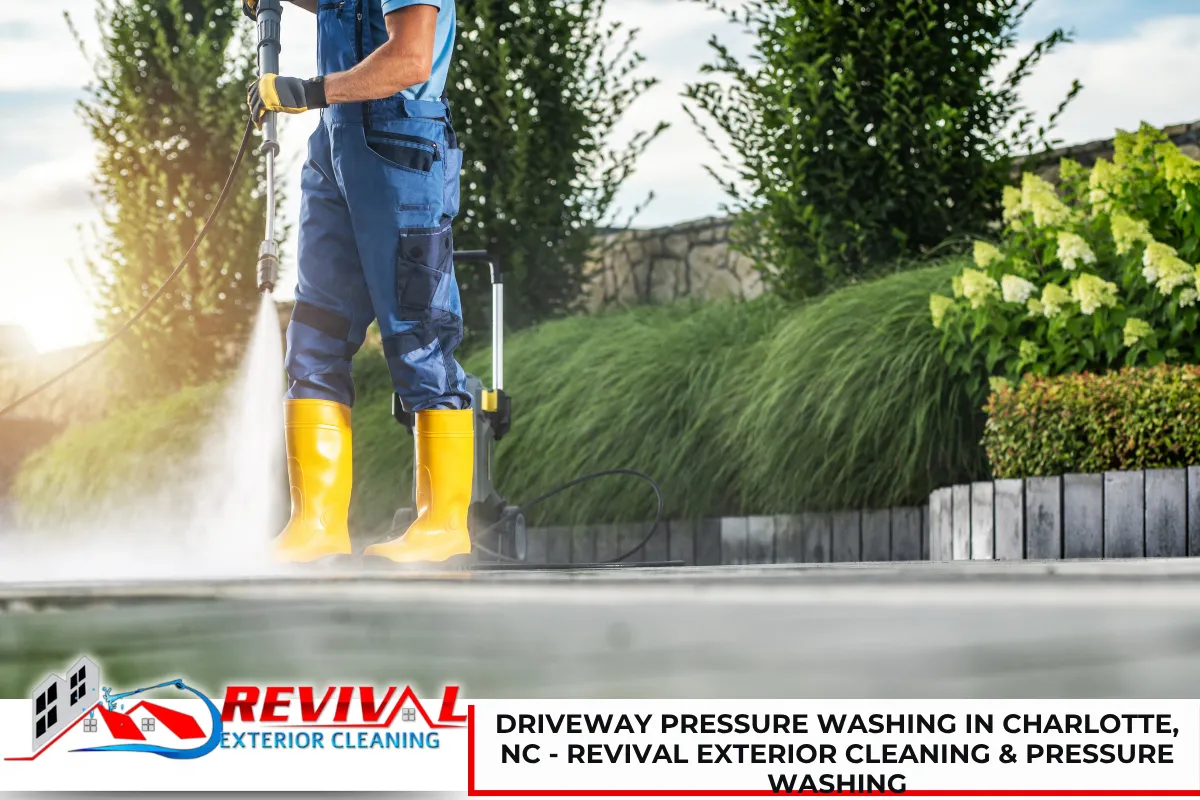
We know how frustrating it is to deal with weeds growing through your driveway. At Revival Exterior Cleaning & Pressure Washing, we provide professional driveway pressure washing designed to remove stubborn buildup and help prevent regrowth. Our team uses the right equipment and proven methods to clean your surface safely and effectively.
We take pride in delivering reliable driveway cleaning services throughout Charlotte, North Carolina, and surrounding areas. Whether you need routine driveway washing or a deep clean, we’re ready to help restore your property’s appearance.
Call us today at (980) 264-2359 or fill out our contact form to schedule your driveway pressure washing service. Let us help you protect and maintain your driveway the right way.
Frequently Asked Questions
Can pressure washing damage my driveway surface?
Pressure washing can damage your driveway if incorrect pressure settings or techniques are used. High pressure can etch concrete or loosen asphalt. Professional driveway cleaning services adjust pressure based on the surface type to avoid damage. Using proper equipment and experience ensures effective cleaning without compromising structural integrity. This is especially important for older driveways or those with existing cracks.
Is it better to remove weeds before or after pressure washing?
It is generally best to pressure wash first to remove surface debris and expose the cracks. This allows weed treatments to penetrate deeper into the root system afterward. Applying herbicides after driveway washing increases effectiveness and helps prevent regrowth. Skipping this sequence may result in incomplete weed removal and faster recurrence.
Are eco-friendly solutions effective for weed control?
Yes, eco-friendly solutions like vinegar-based treatments can help control weeds, especially for smaller infestations. However, they may not be as effective on deep-rooted weeds compared to commercial herbicides. Combining these solutions with driveway pressure washing improves results while reducing environmental impact, which is important for compliance with local runoff regulations.
How long does driveway pressure washing take?
The time required depends on the size and condition of your driveway. A typical residential driveway cleaning can take one to three hours. Additional treatments for weeds or sealing may extend the process. Professional services work efficiently while ensuring thorough cleaning and proper handling of runoff.
Will sealing my driveway stop weeds permanently?
Sealing helps prevent weeds by blocking cracks and limiting moisture intrusion, but it is not a permanent solution. Over time, new cracks may develop, allowing weeds to return. Regular maintenance, including driveway pressure washing and resealing, is necessary to keep your driveway in optimal condition and reduce weed growth.
Important note for homeowners: This article provides general guidance on driveway pressure washing and weed removal. Results may vary based on surface condition and environmental factors. Always follow local Charlotte regulations and consider professional services for safe, compliant, and effective cleaning solutions.
Read Does Pressure Washing Remove Oil Leaks From Garage Floors in Charlotte, NC?