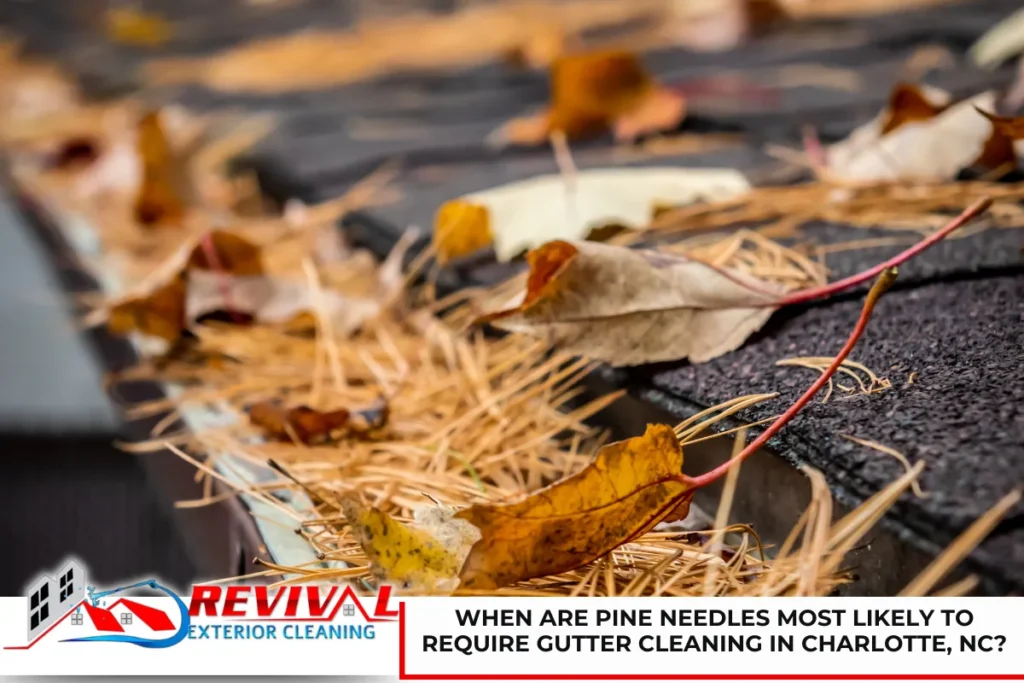
Gutter cleaning becomes important in Charlotte from late summer through fall, when pines release needles and September and October often bring the heaviest drop. Those slender needles do not need to fill a channel to cause trouble; they can interlock around hangers, strainers, seams, and downspout openings, then trap pollen, leaves, and roof grit. One windy afternoon followed by hard rain may turn a light layer into a compact drainage barrier, sending water over the edge toward fascia, landscaping, or the foundation. The practical solution is seasonal rather than calendar based: inspect after visible needle fall and storms, clear roof valleys as well as drainage channels, and confirm every downspout flows freely before the next soaking rain arrives in Charlotte.
Charlotte’s Highest-Risk Window Runs From Late Summer Through Fall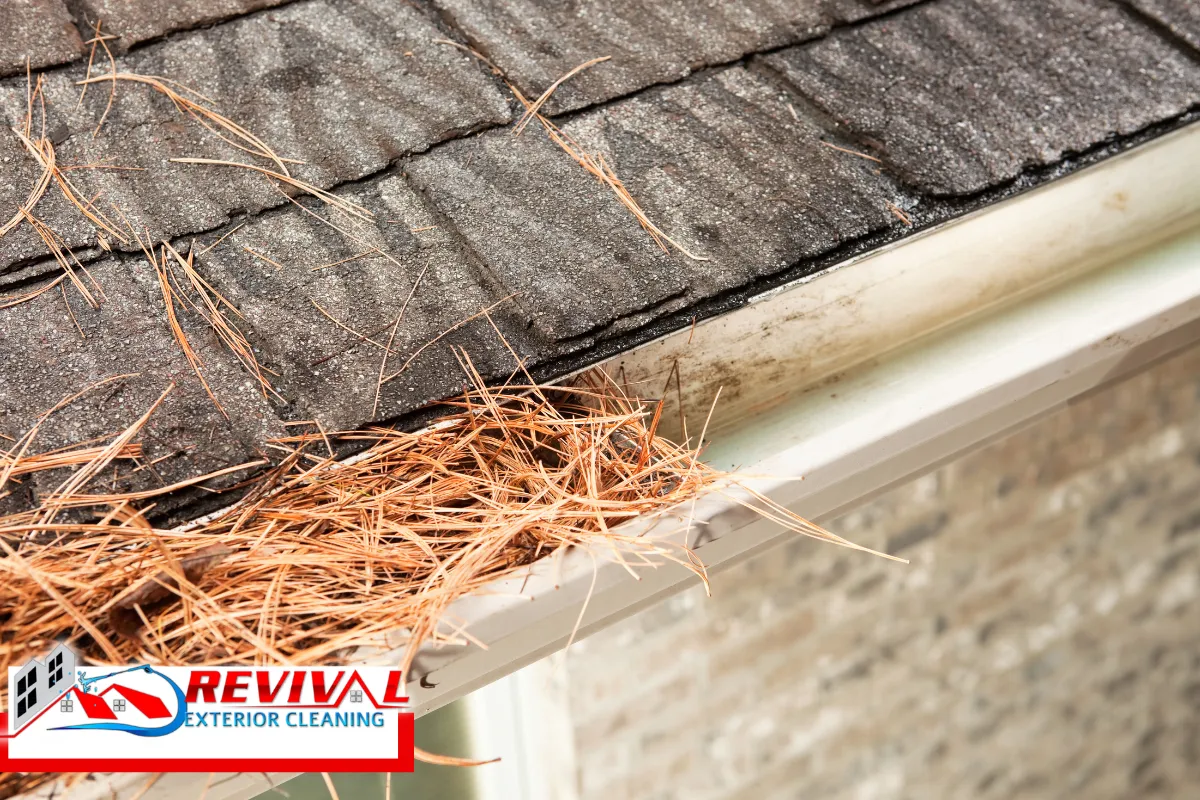
Pine needles can enter a roof-drainage system at any time of year, but the greatest accumulation usually develops between late August and the end of fall. Healthy pine trees naturally discard aging interior needles, even though the trees remain green.
In normal weather, the heaviest shedding often occurs during September and October. However, the precise timing varies with the tree species, moisture conditions, exposure to wind, and the position of branches relative to the roof.
That means homeowners should treat September and October as the primary inspection period rather than assuming every property can wait until December. A roof surrounded by mature pines may collect enough material to obstruct drainage while the seasonal drop is still underway.
A practical schedule for a heavily wooded Charlotte property may include:
- An initial inspection in late August or early September
- Another check during peak needle shedding
- Service after a significant wind or rain event
- A final inspection after most fall debris has settled
- An additional spring visit if pollen, catkins, and seed material accumulate
This approach catches developing obstructions before they become tightly packed.
Late August Can Bring the First Meaningful Accumulation
Some pines begin releasing aging needles near the end of summer, particularly when hot or dry weather accelerates stress. The material may appear harmless because it is dry, light, and loosely scattered.
Dry needles are easy for wind to move. They can travel across roof slopes, settle behind chimneys, gather in roof valleys, and slide toward the eaves. A channel that looks open from the ground may already contain a thin layer caught beneath gutter hangers.
Late-summer cleaning is most likely to be necessary when:
- Pine branches extend over the roof
- Several tall trees stand upwind of the house
- Needles are visible in valleys or along flashing
- Downspouts already contain residue from spring
- The property has not received service since the previous fall
If the system begins the fall with pollen sludge, decomposed leaves, or roof granules in the bottom, the first wave of pine straw has a surface to catch against. That can shorten the time between initial shedding and restricted flow.
September and October Usually Produce the Heaviest Needle Load
For many Charlotte homes, September and October are the most important months for monitoring. Pine needles naturally fall throughout the year, but the annual autumn release can place a concentrated amount of debris on the roof in a relatively short period.
The problem is not based solely on volume. Individual needles overlap and cross one another, forming a loose framework. Additional debris becomes trapped inside that framework. Rain presses the mixture lower, while another layer accumulates above it.
Homes beneath dense tree canopies may therefore require attention before the seasonal shedding has completely ended. Waiting for the last needle to fall can leave the drainage system obstructed during one or more substantial rain events.
A well-timed visit in the middle of the drop may be appropriate if water movement is already slowing. A follow-up inspection after the trees finish shedding can remove what arrived later.
November and Early Winter Reveal Hidden Fall Blockages
A late-fall inspection is valuable because it captures needles that fell after an earlier service. It also reveals whether fall rain pushed debris into the downspouts.
By November, pine straw may be mixed with broad leaves, twigs, seed material, and shingle granules. This combination is heavier and less likely to blow away naturally. Cool, shaded sections may remain damp longer, especially on rooflines with limited sun exposure.
At this stage, a blockage may sit below the visible opening. The upper channel can look relatively clear while an elbow farther down remains obstructed. A controlled flow test is therefore more informative than visual inspection alone.
An end-of-season gutter wash can also expose slow drainage caused by a crushed leader, separated joint, improper pitch, or underground extension problem. Removing organic material should improve flow; if it does not, the system may need repair rather than additional cleaning.
Spring Pollen Creates a Second Pine-Needle Risk Period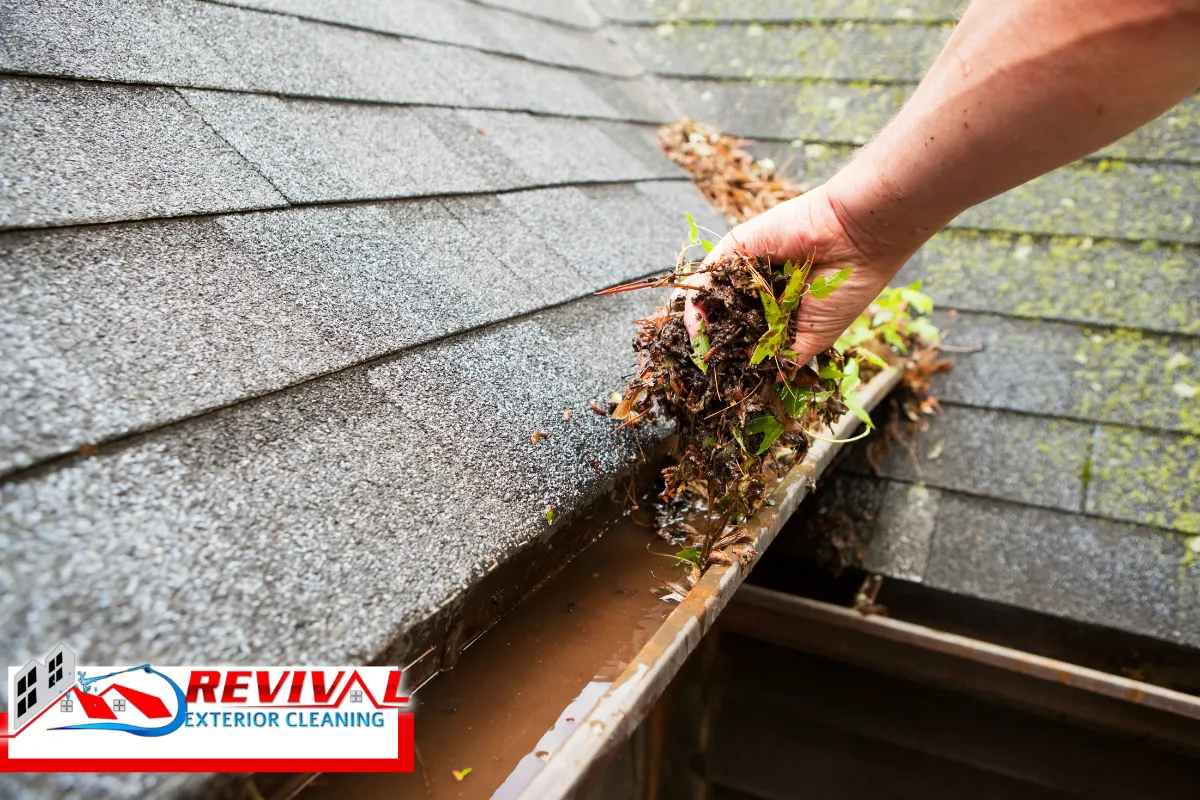
Fall deserves the most attention, but it is not Charlotte’s only problem season. Spring introduces pollen, flower parts, oak catkins, seed pods, small twigs, and leftover winter debris.
Pollen does not behave like a large leaf. It can coat the bottom of the channel, combine with moisture, and form a film that catches new material. Needles left from winter can become embedded in this residue.
A spring inspection is particularly useful when a house has:
- Several types of mature trees around the roofline
- Gutter guards that collect debris on top
- Shaded channels that dry slowly
- Complex roof valleys
- Long horizontal runs with few outlets
- Downspouts connected to buried drainage lines
Spring service prepares the system for warmer-season thunderstorms. It also establishes a cleaner starting point before summer heat and autumn needle drop create another maintenance cycle.
Why Pine Needles Block Drainage So Efficiently
Pine straw creates a different obstruction from broad leaves. A large leaf may cover an outlet, but dry leaves can sometimes blow away. Long, narrow needles slip through coarse screens and lodge around small structural features.
Needles Interlock Around Hangers and Outlets
A single pine needle is unlikely to stop rainwater. Hundreds of overlapping needles can create a framework that functions like a filter. Water may initially pass through while grit, pollen, leaf fragments, and other fine material stay behind.
That process can make the obstruction progressively denser. The gutter may still handle light rain, giving the impression that everything is working. During a strong downpour, the reduced opening cannot accept roof runoff quickly enough.
Common collection points include:
- Downspout outlets
- Inside and outside corners
- Gutter hangers and fasteners
- Separated seams
- Low spots in improperly pitched runs
- Valleys that deliver water to a concentrated area
- Openings around guard panels
The first visible overflow often appears at a corner or above a downspout, but the underlying restriction may extend through a much larger section.
Moisture Turns Loose Debris Into a Dense Mat
Repeated wetting and drying changes the character of accumulated debris. Rain presses the needles together, while sediment fills spaces between them. Organic matter begins breaking down and produces a dark, compact layer along the bottom.
This mat can retain moisture against metal surfaces, seams, fasteners, and the roof edge. It also reduces the effective depth available to carry runoff.
Removing only the loose material from the top may leave the compacted layer behind. Thorough service should address the bottom of the trough, the outlet, and accessible sections of the downspout.
Roof Valleys Can Refill a Recently Cleared Channel
Needles frequently collect above the drainage system before entering it. Roof valleys are especially important because they concentrate water from two adjoining slopes.
A pile lodged in a valley can release gradually during wind and rain. Consequently, a cleared channel may refill quickly if roof-edge and valley debris remains in place.
Roof access introduces serious fall hazards, particularly on steep, wet, high, or complex surfaces. Homeowners should not walk the roof merely to remove visible pine straw when safe access and suitable fall protection are unavailable.
Read Should You Schedule Gutter Cleaning in Charlotte, NC Before Heavy Rain?
Weather Can Move the Cleaning Date Forward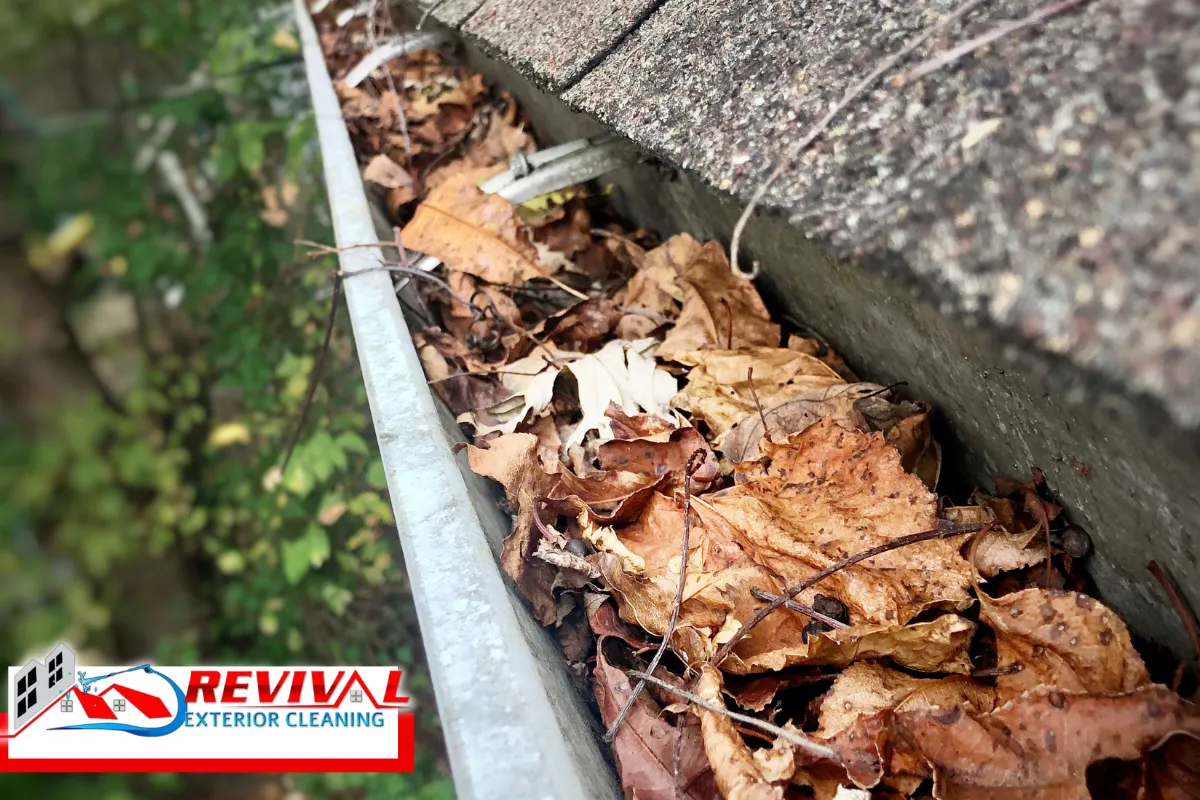
The calendar provides a starting point, but weather and site conditions determine when service is actually needed. Charlotte receives precipitation throughout the year, and its local climate record includes substantial rainfall events. Drainage should therefore remain functional outside the traditional fall-cleanup period.
Wind Delivers Debris From Trees Beyond the Roofline
Branches do not have to touch a house for their needles to reach it. Wind can carry light pine straw from neighboring parts of a property and deposit it on the leeward side of the roof.
After gusty weather, inspect from the ground for:
- Fresh piles in valleys
- Needles caught behind vents or chimneys
- Debris hanging from the gutter lip
- Accumulation on top of guards
- Displaced or loose drainage components
If the storm also broke branches or damaged shingles, schedule an appropriate roof assessment rather than treating the issue as ordinary cleaning.
Dry Spells Allow Needles to Accumulate Quietly
A long period without rain can conceal a developing obstruction. The channel may continue collecting pine straw, but there is no runoff to expose the restriction.
When rain finally returns, a large amount of dry material can move toward the outlet simultaneously. Some debris may bridge over the opening, while finer pieces enter the first downspout elbow.
A pre-rain inspection is sensible when substantial needle fall occurs during a dry period. Do not wait for visible overflow if the channels are already holding debris and heavy rain is forecast.
Back-to-Back Storms Compact Existing Material
One storm may not completely block the drainage path. Repeated rain can press existing material into a denser mass, then deliver additional needles and leaves from the roof.
Cleaning may be necessary between storm systems if the first event produces slow discharge, edge overflow, or standing water. Attempting to work during rain, lightning, or strong wind creates unnecessary risk. Schedule service only when surfaces and access conditions are suitable.
Warning Signs That Should Override a Routine Schedule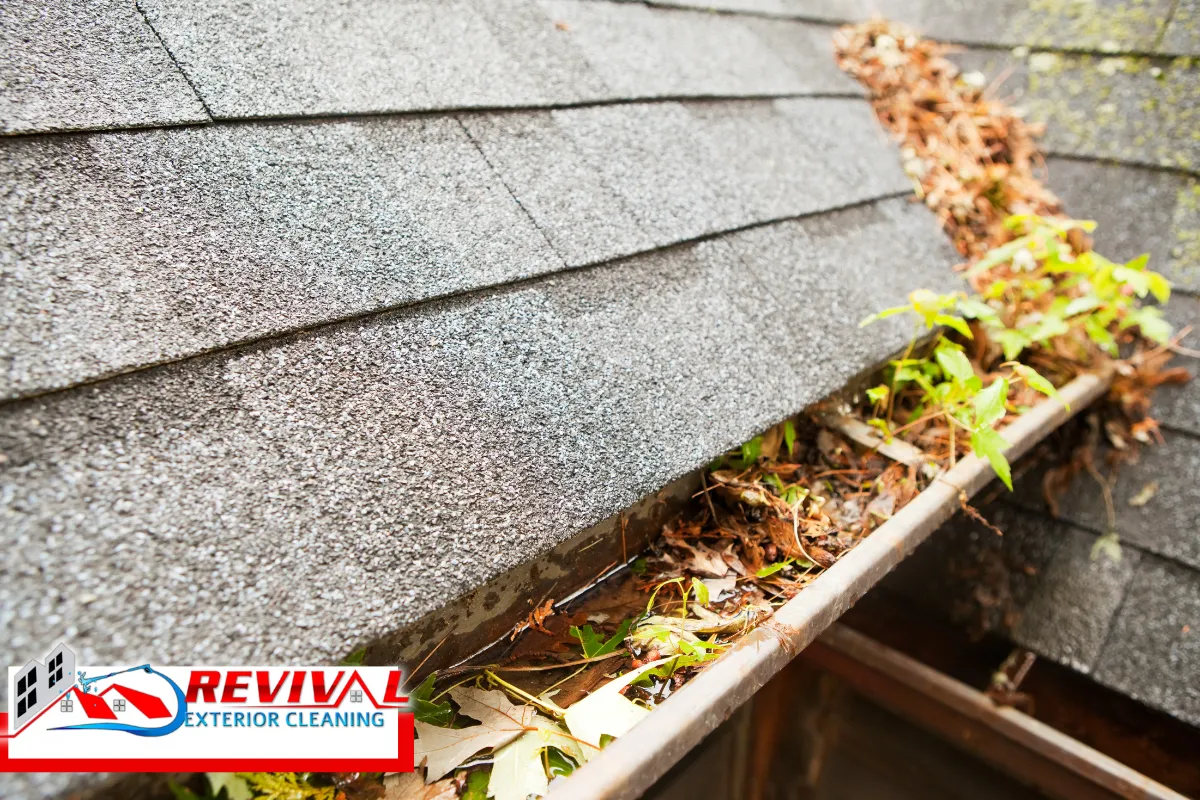
A fixed twice-yearly plan is not sufficient for every Charlotte property. Homes directly beneath pines may need more frequent inspections, while houses without nearby tree coverage may require less.
The following symptoms indicate that the system should be evaluated regardless of the month:
- Water spills over one or more sections during rain.
- Little or no water exits a downspout serving a large roof area.
- Pine needles are visibly protruding from an outlet.
- Plants or moss are growing in the channel.
- A section sags or holds water after the weather clears.
- Dark runoff marks appear on fascia or siding.
- Soil is eroding beneath the roof edge.
- Water pools close to the structure.
- A downspout joint leaks under moderate flow.
- Birds, insects, or small animals repeatedly visit one section.
These signs do not all prove that pine needles are responsible. Loose fasteners, damaged seams, inadequate sizing, poor pitch, underground drainage problems, and roof geometry can create similar symptoms.
Observe the System During Rain From a Safe Location
Dry-weather inspections show debris, but rainfall reveals performance. From the ground or through a closed window, watch how water enters the channels and leaves each downspout.
Look for delayed discharge, concentrated overflow, leakage at joints, or water running behind the gutter. Never climb a ladder during a storm to investigate the cause.
The safest time to document a problem is while remaining on stable ground. Photographs or short video clips can help a service provider identify which roof section feeds the affected area.
Check the Ground After the Rain Stops
Evidence around the property can reveal overflow that was not observed directly. Fresh mulch displacement, washed-out soil, splattered siding, and narrow trenches beneath the eaves suggest that water missed its intended drainage path.
Inspect downspout discharge areas as well. Water should not simply leave the pipe and collect beside the foundation. Splash blocks and extensions must remain aligned, unobstructed, and positioned for the property’s drainage plan.
Choosing a Cleaning Frequency for Pine-Covered Properties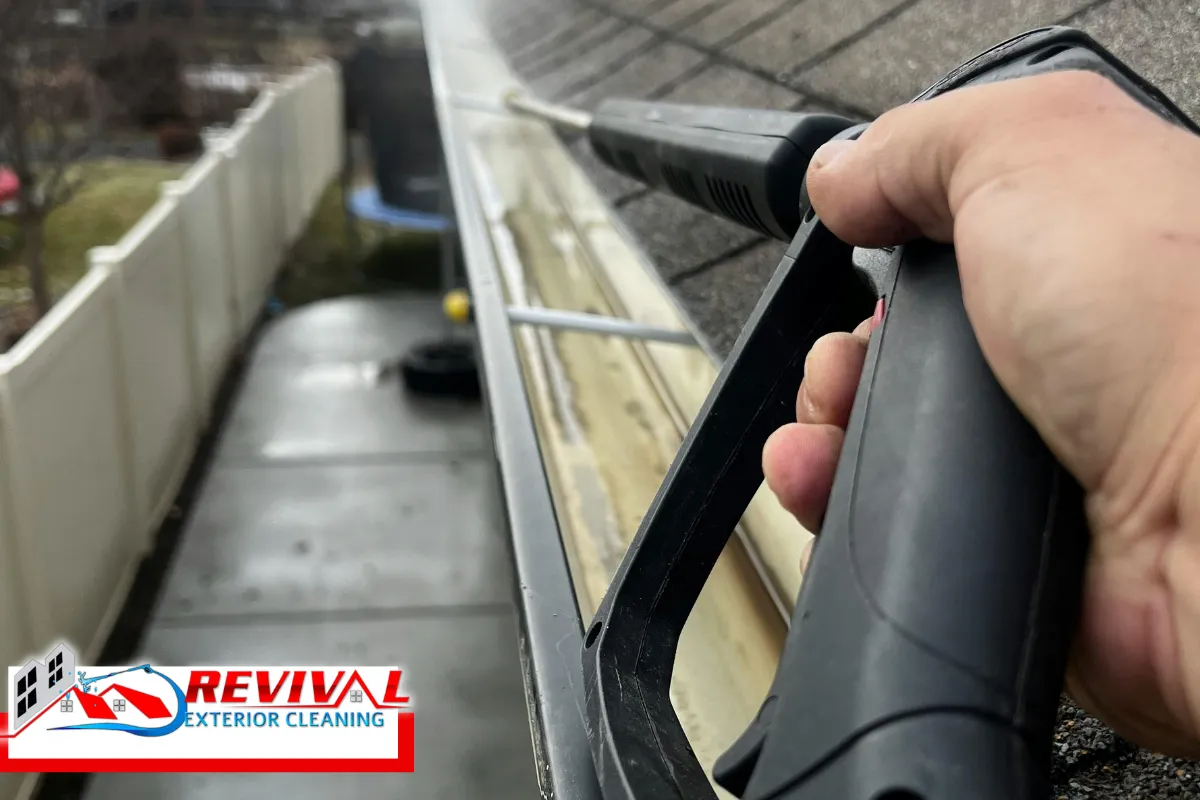
There is no universal schedule for every home. Frequency should reflect tree density, roof design, previous blockages, and the amount of material found during each visit.
A practical starting framework is:
Light Pine Exposure
Inspect in early fall and again after the main seasonal drop. Annual service may be sufficient when little material accumulates and every outlet passes a flow test.
Moderate Pine Exposure
Plan for spring and late-fall service, with an additional visual check during September or October. Schedule earlier work if wind deposits a visible layer.
Heavy or Overhanging Pine Exposure
Inspect throughout the peak drop and after major weather events. These properties may need service more than twice per year because a single fall visit could occur before or after the most consequential accumulation.
Homes With a History of Overflow
Use the shortest interval that previously kept the system open, then adjust according to documented conditions. If repeated cleaning does not prevent overflow, evaluate gutter capacity, pitch, outlet placement, guard design, and downstream drainage.
The objective is not to maximize appointments. It is to clean before the debris load prevents the system from carrying runoff.
What a Thorough Pine-Needle Service Should Address
An effective process involves more than pulling visible straw from the top.
A careful gutter cleaner should evaluate the accessible drainage path from the roof edge to the discharge point. The scope may vary by property, but a complete visit commonly involves:
- Reviewing ground conditions and access hazards
- Identifying overhead electrical lines and fragile surfaces
- Removing loose debris without damaging the roof edge
- Clearing compacted material from the bottom
- Opening downspout inlets and accessible elbows
- Checking corners, seams, hangers, and end caps
- Testing flow with a controlled amount of water
- Observing discharge points for backups or leaks
- Collecting removed debris
- Reporting visible damage or inaccessible areas
A flow test matters because an open-looking channel does not confirm that the leader is clear. Water should travel toward the outlet without backing up, pooling in low sections, or leaking through joints.
Gutter washing may be included when fine sediment remains after the larger material is removed. Controlled rinsing is different from directing excessive pressure at shingles, seals, painted finishes, or loose components.
Ladder and Electrical Hazards Deserve Serious Attention
Cleaning at roof height combines unstable access, awkward reaching, wet surfaces, tools, and nearby electrical hazards. A ladder should stand on a stable, level base and should never be repositioned while someone remains on it.
Published workplace ladder requirements emphasize stable placement and protection against displacement. These rules apply to employers and workers rather than serving as a complete do-it-yourself code, but they illustrate the risks professionals must manage.
Homeowners should avoid:
- Placing a ladder on loose mulch, wet soil, or uneven paving
- Leaning sideways beyond the rails
- Carrying an open tool while climbing
- Working near overhead power lines
- Standing on prohibited upper rungs
- Using metal equipment near energized conductors
- Accessing a wet, icy, or steep roof
- Cleaning alone when an emergency could go unnoticed
A gutter washer working professionally should use equipment and procedures appropriate to the height, surface, electrical exposure, and condition of the building.
Do Gutter Guards Eliminate the Pine-Needle Schedule?
Guards can reduce the amount of debris entering the channel, but they do not create a maintenance-free system. Pine straw can collect on top, lodge in seams, or enter through openings that are too large.
Coarse screens often stop broad leaves while allowing slender needles to pass. Fine micro-mesh designs may block more small debris, but pollen, roof grit, and organic residue can still coat the surface.
Guarded systems require inspection for:
- Needle piles that redirect water over the edge
- Sagging or separated panels
- Openings around corners and end sections
- Debris lodged beneath the guard
- Fasteners backing out
- Moss or residue limiting water entry
- Hidden standing water in the channel
Do not install a guard over an existing blockage. The channels and outlets should be cleared, tested, and checked for condition first.
The best guard choice depends on roof pitch, runoff volume, tree species, maintenance access, and existing drainage design. No product should be assumed to solve an undersized, poorly pitched, or damaged system.
Protecting Fascia, Landscaping, and Drainage Paths
The job of the roof-drainage system is to collect runoff and deliver it to an appropriate discharge location. When pine needles disrupt that path, water may spill against components that were not designed for repeated saturation.
Overflow can contribute to:
- Peeling or stained exterior finishes
- Damp fascia and soffit materials
- Landscape washout
- Mulch displacement
- Splashback on siding
- Ponding near walkways
- Water collecting beside the structure
These outcomes are not proof of structural damage, and cleaning cannot repair deterioration that has already occurred. Prompt inspection helps separate a removable blockage from a condition that needs a roofer, carpenter, drainage specialist, or other qualified professional.
Standing water after cleaning is particularly important. It may indicate insufficient pitch, a sagging section, or a restricted downstream connection rather than additional pine straw.
Charlotte Rules and Responsible Debris Handling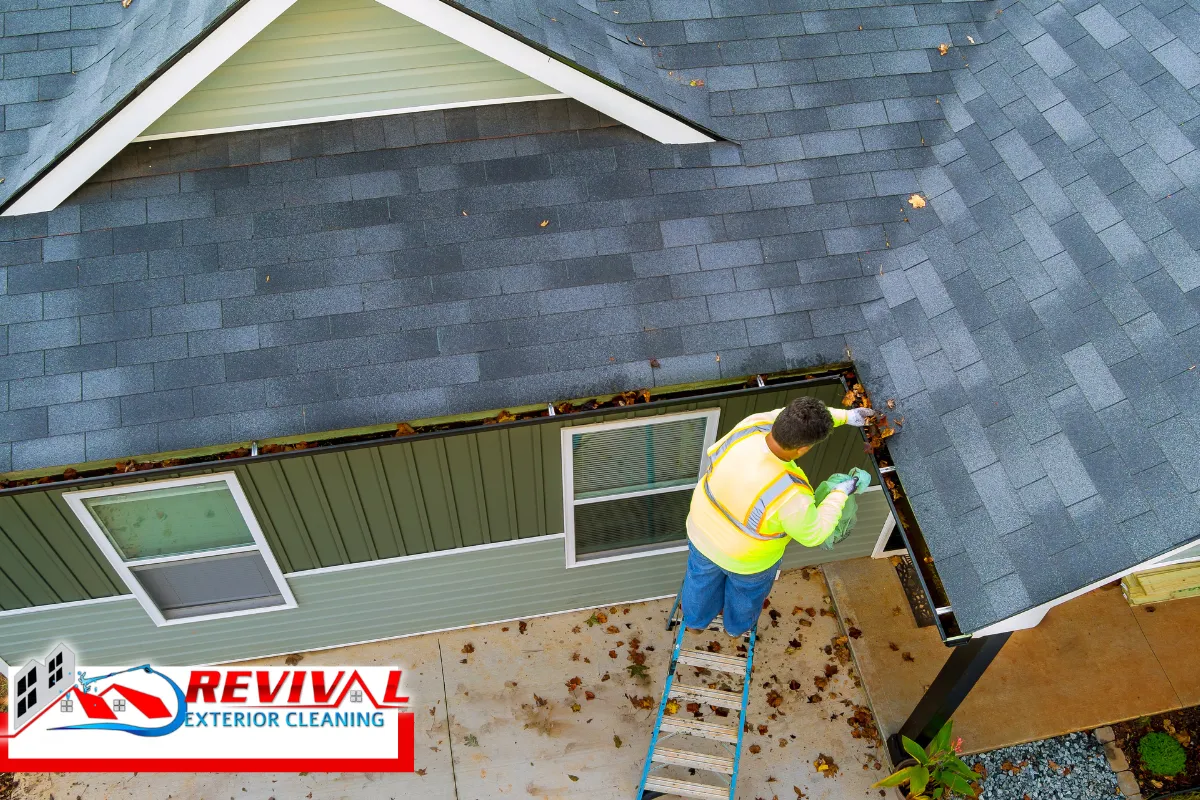
Routine debris removal is maintenance, but repairs, major alterations, historic-property work, or drainage changes can raise separate approval and code questions. Verify current requirements with the appropriate Charlotte or Mecklenburg County department before changing the system’s configuration.
Do not direct roof runoff or cleaning residue in a way that harms neighboring property, obstructs public areas, or introduces debris into stormwater infrastructure. Keep pine straw, sludge, and sediment contained during the work.
Charlotte’s yard-waste preparation guidance instructs residents to place accepted yard material in paper bags or reusable containers weighing no more than 75 pounds when full; plastic bags are not accepted for yard-waste collection. Confirm current collection rules before setting out material, especially when gutter debris contains non-organic waste.
Repairs should preserve effective drainage, secure connections, and suitable discharge. Cleaning is not a substitute for correcting loose hangers, leaking seams, failed fascia, damaged roof edges, or crushed downspouts.
The Best Time Is Before Pine Straw Controls the Water
Charlotte homeowners are most likely to need service from late summer through fall, with September and October representing the central pine-needle risk period. A second inspection after the seasonal drop catches material that arrived following an earlier visit, while spring maintenance removes pollen, seed debris, and winter residue.
The property itself remains more important than a generic calendar. Nearby pines, overhanging branches, roof valleys, gutter guards, wind exposure, and previous overflow all affect how quickly an obstruction forms.
Watch how the system performs, inspect safely after storms, and act when accumulation becomes visible. Timely maintenance keeps pine needles from turning a light seasonal layer into a compact barrier at the exact moment the roof needs dependable drainage.
Gutter Cleaning in Charlotte, NC – Reach out to Revival Exterior Today!
At Revival Exterior Cleaning & Pressure Washing, we help protect Charlotte homes from the compact pine needles, roof grit, and organic buildup that interrupt rainwater flow. Our gutter cleaning service clears debris from the channels, checks problem areas around outlets, and helps restore dependable drainage before the next storm. We approach every property carefully and recommend service based on roof access, nearby trees, and visible accumulation—not a one-size-fits-all schedule. If water is spilling over the edge, plants are growing in the trough, or you cannot remember the last service, let our team take a closer look. Call us at (980) 264-2359 or fill out our contact form to schedule service in Charlotte or a prominent surrounding area with confidence today.
Frequently Asked Questions
Can accumulated pine needles affect a roof or gutter warranty?
Pine needles themselves do not automatically void a roof or gutter warranty, but neglected drainage may affect coverage for damage attributed to poor maintenance. Warranty language differs among manufacturers, installers, and materials, so review the terms instead of relying on a rule. Keep invoices, dated photographs, and inspection notes showing that debris was removed and drainage was tested. If a warranty claim involves stained fascia, loose fasteners, roof-edge moisture, or leaking seams, contact the installer before authorizing alterations. Cleaning preserves evidence better when the condition is documented first. Ask the warranty provider which maintenance records and approved methods it requires.
Will cleaning the inside of a gutter remove dark exterior streaks?
Dark streaks on the visible face are usually an exterior appearance issue rather than proof that the channel is blocked. Rainwater can carry pollutants, asphalt residue, and organic material over the gutter lip, leaving marks sometimes called tiger striping. Clearing the interior restores drainage but may not remove bonded discoloration. Exterior brightening uses a surface-appropriate cleaning solution and gentle agitation, with care around paint, oxidation, plants, and siding. Avoid assuming stronger pressure is better; aggressive spraying can force water behind trim or damage a finish. Request a test spot when the coating is aged, chalky, previously repainted, or already peeling.
How should pine needles be handled when downspouts feed a rain barrel?
A rain barrel makes unrestricted roof drainage more important because its inlet screen and overflow route can collect pine needles. Disconnect or bypass the barrel before clearing a downspout, follow the barrel manufacturer’s instructions, and prevent loosened debris from entering the tank. After service, inspect the screen, diverter, overflow hose, and mosquito barrier, then confirm overflow discharges to a suitable area away from the structure. Water captured from roofs can contain contaminants, so use it only for appropriate nonpotable purposes. If the system was installed under a stormwater program, preserve required components and check maintenance guidance before changing its configuration.
What should I do if an animal nest is found in a downspout?
Do not reach into a nest or force water through it. Birds, squirrels, wasps, and other animals can occupy roof edges or downspouts, and removal may involve injury risks or wildlife protections that depend on the species and nesting status. Stop work, keep people and pets away, and observe from a safe location. A wildlife professional can identify the occupant and recommend lawful timing or exclusion. After the area is safely cleared, inspect for bent guards, chewed components, displaced end caps, and nesting material deeper in the leader. Seal entry points only after confirming that no animal remains trapped inside.
What records should I keep if clogged gutters cause property damage?
Documentation helps establish the condition of the roof-drainage system before and after maintenance. Take ground-level photographs of overflow marks, loose sections, stained fascia, eroded soil, and each downspout discharge point. A service report can identify removed material, inaccessible areas, flow-test results, and defects noticed without claiming to diagnose hidden damage. Keep the invoice with weather observations and any repair estimates. If active water intrusion or substantial property damage exists, contact the insurer promptly and follow its instructions before discarding damaged materials. Routine maintenance records do not guarantee coverage, but they can create a chronology for adjusters, contractors, and property owners.
Disclaimer: Seasonal timing varies by property, tree coverage, weather, and drainage design. This article provides general maintenance information and does not replace an onsite inspection, legal advice, code review, warranty guidance, or professional safety assessment.
Read Do Dirty Gutters Attract Pests? The Hidden Risks Without Regular Gutter Cleaning in Charlotte, NC
Does Soft Window Cleaning Keep Charlotte Homes Cleaner Longer Than Traditional Methods?